

• Home
  • What is Net House?

What is Net House?

Agriliance Net House Structure

Protected Farming at affordable price

The agricultural industry is already facing a lot of hardships because of the extreme weather conditions and the change in the pattern of rainfall every year. There have been new changes in the agriculture industry as now it can be practised almost everywhere instead of those farming patterns that were limited to just one place.

It’s the time when you can cultivate almost anything and anywhere. But how? The invention of the net house was one of the modern inventions in agriculture that have helped the industry grow a lot.

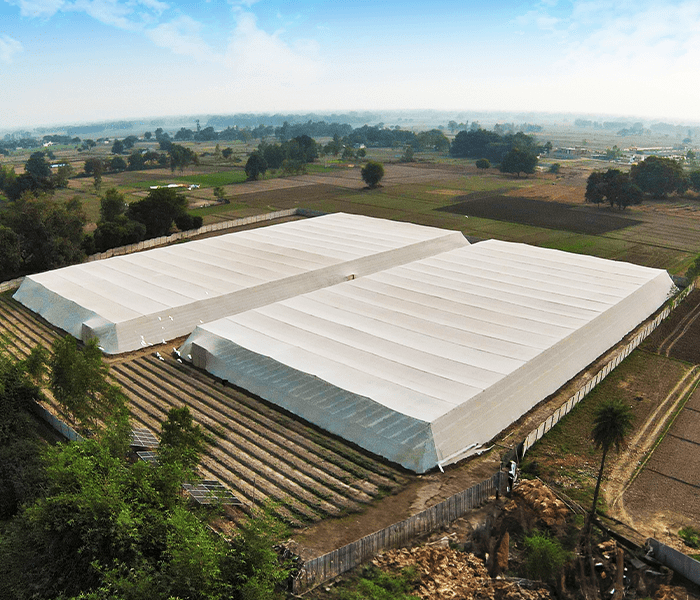
A net house is a kind of greenhouse. A net house is a mechanical structure made using galvanized steel covered by nets or insect nets. Such net houses allow an only appropriate amount of heat, air and moisture to pass through them to create the required climatic conditions for the better growth of the plant. This way the net houses allow the plants to grow the healthiest. A net house is a future of farming that everybody is looking forward to. It is only because it can withstand the harsh climatic conditions in areas like Rajasthan and Uttar Pradesh, where there is also low water supply and other situations that make farming with traditional methods hard. This is where the Net House Farming comes into existence. Let’s read on to learn more about what is a net house, net house farming and the greenhouse net benefit for the agricultural field.

Different Shade Factors before you buy a Net House

Before you buy a shade net house, it is significant to understand the different Shade Factors available in a net house. Net houses are designed using polyethene material, but they come in various Shade Factors like 40% Shade Factor implies that 40% light intensity will be blocked, and the rest 60% light intensity will be allowed to pass through the shade net.


15% Shade Factor

35% Shade Factor

40% Shade Factor

50% Shade Factor

75% Shade Factor

90% Shade Factor

Types of Net Houses

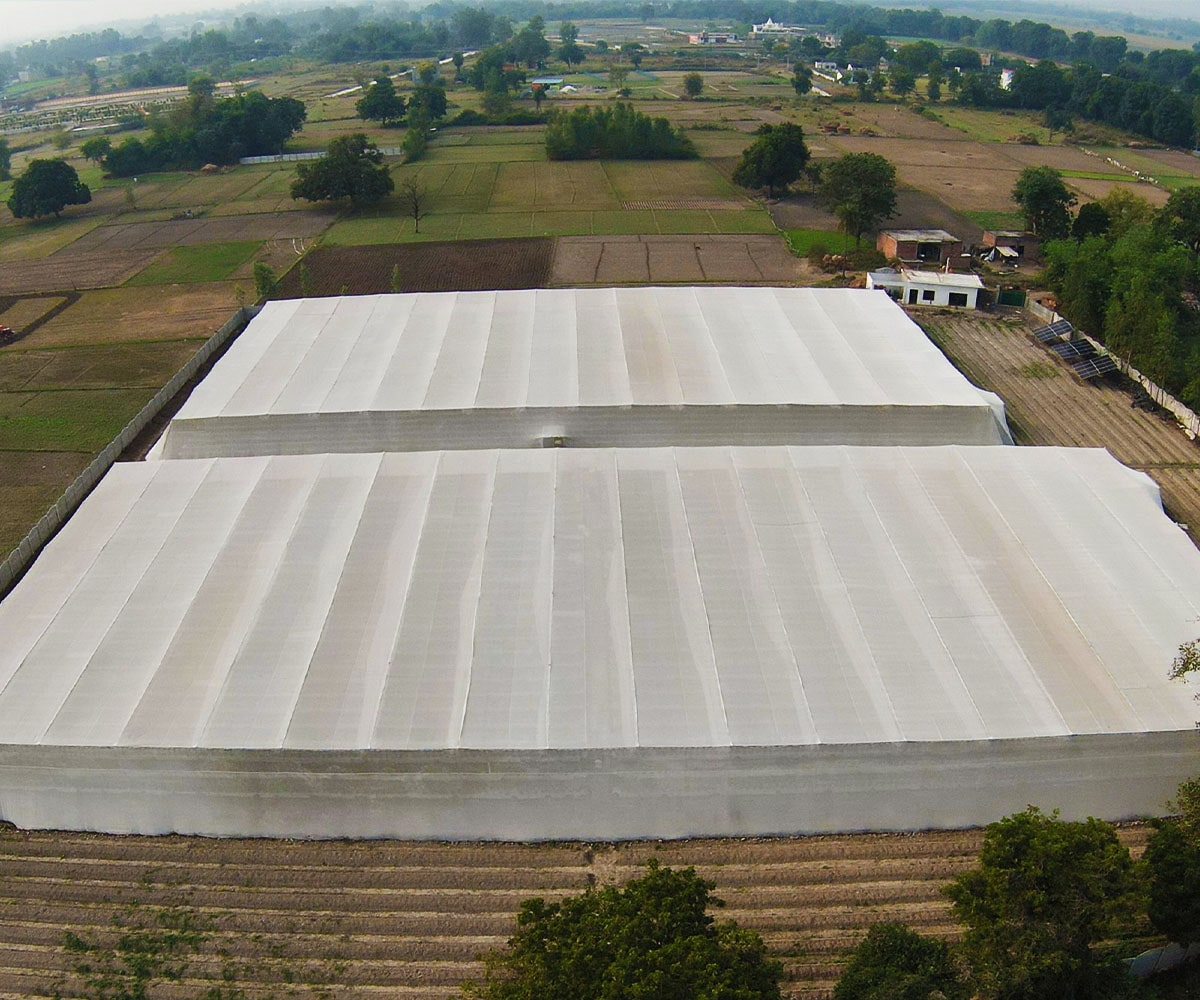
Flat Roof Shade Net Houses

Flat roof shade net houses are agricultural structures designed to regulate light intensity, effectively controlling the amount of heat and light that enters the space. These net houses feature flat roofs made from polyethylene and are supported by materials such as bamboo, wood, or galvanized steel pipes. The primary function of these shade net houses is to create an optimal environment for crop cultivation by moderating temperature and light conditions. These structures are especially beneficial for growing vegetables during the off-season, as well as cultivating exceptional fruits and flowers that require specific environmental conditions. By investing in flat roof shade net houses, farmers can meet the seasonal demands for a variety of crops, ensuring a steady supply of high-quality produce throughout the year. The controlled environment provided by these net houses not only enhances crop productivity but also improves the overall quality of the produce. This makes them an invaluable asset for modern agricultural practices, allowing farmers to maximize their yields and profitability. Additionally, the versatility of flat roof shade net houses makes them suitable for various types of farming operations, from small-scale farms to larger commercial enterprises.
Tab Image

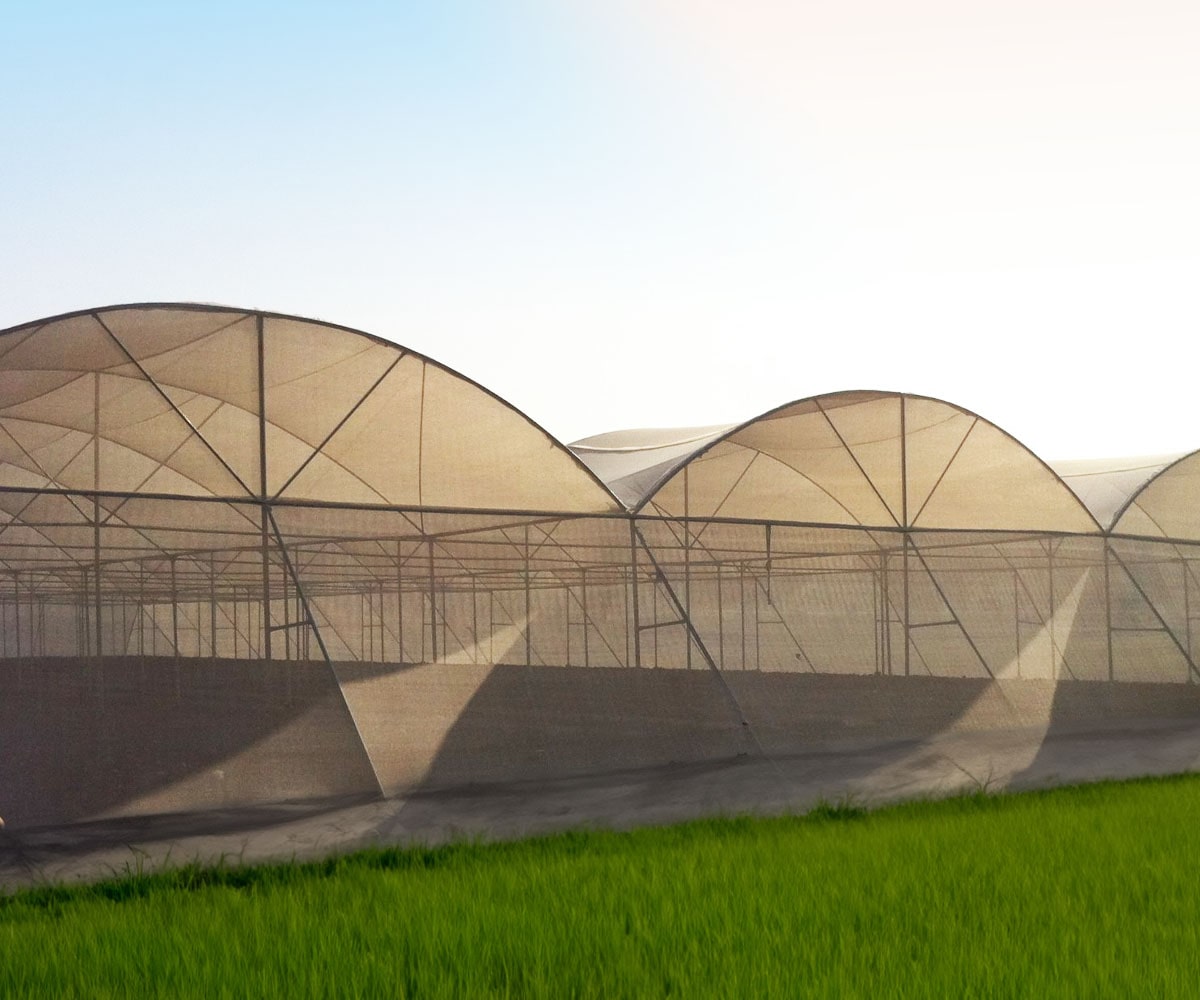
Dome Shaped Shade Net Houses

Dome-shaped shade net houses are specifically designed to control light while catering to diverse customer requirements in terms of dimensions and sizes. Unlike flat roof shade net houses, these structures boast an ergonomic and visually appealing design, providing better air circulation and even light distribution. The dome shape also allows for efficient water runoff and reduced wind resistance, making them more durable and less prone to damage.

These net houses require minimal maintenance due to their sturdy construction and effective design, which minimizes wear and tear. Farmers prefer dome-shaped shade net houses for their ability to create optimal growing conditions for various crops, including vegetables, fruits, and flowers. They protect plants from harsh weather while ensuring adequate light control, essential for healthy crop growth.

The flexibility in dimensions and sizes allows for customization based on specific farming needs, making them suitable for both small-scale and large-scale agricultural operations. Dome-shaped shade net houses offer a practical and aesthetically pleasing solution, enhancing the working environment for farmers and contributing to better crop management, increased productivity, and improved crop yield and quality.

Tab Image
Project Particulars Rate per Sq. metre Total Amount
Single Layer Cable Purlin Nethouse
Structure + Trellising + Installation
₹364.62 ₹14,92,025
Double Layer Cable Purlin Nethouse
Structure + Secondary Layer (White Shade Net 50%) + Trellising + Installation
₹394.12 ₹16,12,740
Double Layer Cable Purlin Nethouse - Aluminet in secondary Layer
Structure + Secondary Layer (Aluminet 50%) + Trellising + Installation
₹518.02 ₹21,19,738
Double Layer Pipe Purlin Nethouse
Structure + Secondary Layer (White Shade Net 50%) + Trellising + Installation
₹789.42 ₹32,30,306
National Horticulture Board Subsidy ₹355/sq. mtr. ₹14,52,660*
Total Investment for Pipe Purlin Nethouse after subsidy ₹17,77,646*

Total Cost for 1 Acre Single Layer Nethouse Structure in India

Starting from ₹14,92,025

Total Cost for 1 Acre Double Layer Nethouse Structure in India

Starting from ₹17,77,646*

Important Note

These are tentative prices and may change as per the location, working conditions, & requirements of farmers.

The subsidy will be provided according to NHB guidelines, and terms and conditions apply.

To know the calculations based on your land location & weather conditions, Connect to us

Advantages of Net House

Off-Season Production

Shade net houses aid in cultivating vegetables, flowers, and fruits in the off-season regardless of the climatic conditions. The net house helps maintain a required temperature for efficient and better plant growth.

Crop Protection

Net houses protect your crop from natural disturbances like rain, wind, hail, snow, etc. and allow the trapped heat to pass through them to help the plants from being affected by the climatic conditions.

Increases Quality & Yeild

Shade net houses help protect the crops from rodents that usually damage the crops in an open field. It is because net houses are locked. On the other hand, the use of pesticides can be required based on the farmer’s requirements.


Steps to Plan for a Net House Wisely

You should plan the structure of the shade net house. Like considering the crop type that will be grown, check the locally available materials required for net house farming & local climatic conditions. You should always keep the provisions on one side for future expansion.


Selection of Site

The first step is to select a suitable site connected well with markets that can supply you with the input materials and produce sales. Make sure you initiate shade net house only in a location away from buildings, and even industrial pollutants. Ensure you select a site with zero drainage issues & a regular electricity supply & water supply. Find a location where windbreakers are only around 30m away from the structure.

Orientation

For the shade house orientation, there are around two criteria. The orientation is about the uniformity of the light intensity in the wind direction and the shade house. Any single-span net house structure will be oriented either east-west or north-south. On the other hand, the multi-span net house structure should be oriented north-south for the uniform light intensity within the shade net house.

Structural Materials

Any shade net house is designed of two primary components – the frame and the cladding material. The shade house structure provides support for the cladding material and helps protect against rain, wind, and other climatic issues. The shade house mid steel angle frame easily lasts up to 25 years if you keep on getting the anti-rust treatment done promptly for better maintenance of your net house.

Agriliance Agriprenuers

Nothing touches people more than a true story of struggle and success. A story that reflects real accomplishments that others can relate to and learn from. Producers around the world face very similar challenges. Given the opportunity to share them, they can not only help other farmers but also help strengthen their communities and the global environment. Agriplast Agripreneurs created history in Polyhouse Farming not only in India but also in other countries.

Frequently Asked Questions

Why Agriplast Polyhouse ensure superior yields compared to other polyhouses?

In this video, Abhishek Bhatt, Director of Agriplast Protected Cultivation, will provide a comprehensive breakdown of why Agriplast Polyhouse outperforms other polyhouses in terms of yield. He’ll elucidate on key features like superior design, Israeli technology application, and optimal environmental control. The design facilitates enhanced ventilation, ensuring ideal growing conditions. Additionally, the use of Israeli technology, tailored for Indian agricultural needs, plays a crucial role in maximizing yields. Stay tuned to gain valuable insights into how Agriplast Polyhouse revolutionizes protected cultivation for superior agricultural outcomes.

What is the difference between greenhouse and polyhouse?

A greenhouse is a transparent structure which is made using glass where plants are grown under certain climatic conditions. The agricultural industry has got many innovations, and the greenhouse technology makes use of modern and smart technology to give optimum facilities to the plants for their better and more efficient growth all around the year. Polyhouse is a kind of greenhouse where polyethene plastic material is used to create the polyhouse instead of the use of glass.


What is the working of a greenhouse?

A greenhouse is designed to grow plants even in adverse climatic conditions. The translucent glass that covers the greenhouse gives the plants enough light to let them carry the photosynthesis process easily by absorbing light energy. Since the greenhouse is in an airtight condition, a sufficient amount of sunlight makes the greenhouse warmer from within than the outer atmosphere.


How do we keep the greenhouse warmer during winters?

Greenhouse not only warms the greenhouse from within only in summers but in winters; it allows for an artificial heating solution which is effective but is a bit expensive. Some other inexpensive ways of warming up your greenhouse are:

What are the benefits of a greenhouse?

Greenhouse benefits you in several different ways, which are listed below:

  • Helps in producing fresh crops at any time of the year.
  • The facility of producing the crops all around the year, even in adverse climatic conditions.
  • The greenhouse allows the farmers to create an exclusive environment for the better plant growth.
  • Protects crops from adverse climatic conditions.
  • The light energy within a greenhouse is distributed evenly to all the plants.
  • Greenhouse installation makes it easy for the farmers to grow crops with less use of pesticides.
  • Greenhouse setup helps in saving the total usage of resources.
 

Let's Connect with Agriliance

    Cart (0 items)
    Select the fields to be shown. Others will be hidden. Drag and drop to rearrange the order.
    • Image
    • SKU
    • Rating
    • Price
    • Stock
    • Availability
    • Add to cart
    • Description
    • Content
    • Weight
    • Dimensions
    • Additional information
    Click outside to hide the comparison bar
    Compare